Affichage des articles dont le libellé est Mary. Afficher tous les articles

vendredi 19 juillet 2024

Débatre Marie: Catholique vs Brahnamiste

Dernièrement, j'ai partagé une série d'échanges que j'ai eus avec une personne qui s'inscrit profondément dans la théologie Branhamiste. Et bien, récemment, il a partagé un nouveau point de contentieux entre leur système théologique et le système théologique catholique. Je cite le cœur de son opposition et j'y répondrai ci-dessous :

Ben-yamin Bashizi: "C’est seulement en 431, au concile d’Ephèse, que Marie a été déclarée “Mère de Dieu”. Après cela, on commença à lui donner différents titres comme: “Notre Dame”, “Reine du Ciel”, “Médiatrice”, “Celle qui secourt”, “Celle qui intercède”, “Mère de toutes grâces”, “Mère de l’Eglise”, et aussi “Celle qui a écrasé le serpent”, etc. etc. Beaucoup de ces désignations, qui se rapportaient à Christ, ont été transférées de Christ à Marie, et c’est la raison pour laquelle elles sont également antichrist."

Voici mes réponses:

1. Le Concile d'Éphèse en 431 (Théotokos = Mère de Dieu)

Le Concile d'Éphèse en 431 a proclamé Marie comme Théotokos, c'est-à-dire "Celle qui a enfanté Dieu" ou "celle qui porte Dieu" ou simplement, "Mère de Dieu" comme vous l'avait correctement indiqué. Cette déclaration visait à affirmer la nature divine de Jésus-Christ, en précisant que celui-ci est Dieu dès sa conception. Cependant, il est important de noter que le titre de Théotokos n'a pas été inventé lors de ce concile du 5eme siècle (AD 431), mais qu'il était déjà largement en usage bien avant 431. Par exemple, Saint Athanase d'Alexandrie, dans ses écrits au 4eme siècle (AD 360), utilisait ce terme pour décrire Marie. Dans son ouvrage contre les heresies Ariens, il appelle Marie, Theotokos à 4 reprises. En voici un example quand Il a écrit :

"He took flesh of the Virgin, Mary bearer of God [Theotokos /Mother of God], and was made man."

"Il a pris chair de la Vierge Marie, Mère de Dieu [Theotokos], et s'est fait homme." - Saint Athanase (AD. 360), Discours contre les Ariens, 3, 29.

Source: https://www.newadvent.org/fathers/28163.htm  

En outre, dans l'Évangile selon Luc, Élisabeth appelle Marie "mère de mon Seigneur" (Luc 1:43), ce qui est une reconnaissance explicite de son rôle unique et de l'identité divine de l'enfant qu'elle porte. Car le mot seigneur est cité 17 fois dans le chapitre premier de l'Evangile de saint Luc et à les 16 autre fois il est itulisé comme synonyme pour Dieu. Donc il est normale de comprendre que dans Luc 1:43, Seigneur fait aussi reference à Dieu incarnée en homme, à savoir Jesus Christ. Je recommende une video que j'ai faite dans le passé à ce sujet: "Marie, Mère de 'Dieu Avec Nous' (Emmanuel)" - voici le lien: https://www.youtube.com/watch?v=xQ8ZFVY8JNY&t=2s

2. Les Titres de Marie: Les divers titres donnés à Marie tels que "Notre Dame", "Reine du Ciel", "Médiatrice", etc., ont des fondements scripturaires et traditionnels. Ces titres reflètent différents aspects de son rôle dans l'histoire du salut et dans la vie de l'Église.

a) Notre Dame : Ce titre trouve ses racines dans l'Ancien Testament et les traditions du Proche-Orient ancien. Le terme "Notre Dame" peut être lié au titre de "Reine Mère" en Israël, connu sous le nom de Gebirah ou "Grande Dame". Dans la monarchie davidique, la mère du roi avait un statut élevé et était honorée comme la Gebirah. Par exemple, dans 1 Rois 2:19, Salomon fait asseoir sa mère Bethsabée à sa droite, un signe de grande estime et d'honneur. Puisque Jésus est présenté comme le successeur du roi David par Saint Luc lors de l'Annonciation de Gabriel (Luc 1:32-33), 

Luke 1:32-33  "Il [Jésus] sera grand et sera appelé Fils du Très Haut, et le Seigneur Dieu lui donnera le trône de David, son père. Il règnera sur la maison de Jacob éternellement, et son règne n'aura point de fin." 

Il en découle naturellement donc que Marie recevait sa vocation de mère du Roi d'Israël, aussi connut sous le nom de la "Gebirah" ou, en d'autres mots, "la (Grande) Dame". 

Le mot "Gebirah" (גְּבִירָה, gebı̂yrâh) apparaît six fois dans la Bible (voir eSword King James Concordance, H1377) : 1 Rois 11:19, 1 Rois 15:13, 2 Rois 10:13, 2 Chroniques 15:16, Jérémie 13:18, Jérémie 29:2. Selon l'encyclopédie Wikipedia , le mot "Gebirah" signifie: 

Version Anglaise [original]: "Literally translated, the title means '[Great] Lady', with the word being the feminine counterpart to gəḇīr (גְּבִיר), 'lord'. However, given that this title is most often attributed to a queen mother, the two have become synonymous, and therefore gəḇīrā is most often translated as 'Queen Mother'.

Traduction Française: "Traduit littéralement, le titre signifie '[Grande] Dame', le mot étant le pendant féminin de gəḇīr (גְּבִיר), 'seigneur'. Cependant, étant donné que ce titre est le plus souvent attribué à une reine mère, les deux sont devenus synonymes, et donc gəḇīrā est le plus souvent traduit par 'Reine Mère'". - Lien Wikipedia: https://en.wikipedia.org/wiki/Gebirah

Donc appellé Marie, Notre Dame (Gebirah) n'est pas une invention sournoise mais un simple fait de l'histoire biblique, car les reine-Mère Juifs étaient appellé, Gebirah, i.e Dame. Et puisque Jésus est roi, sa mère est automatiquement une Gebirah, notre Dame.

Source érudite

  • Scott Hahn, "Hail, Holy Queen: The Mother of God in the Word of God"; 
  • Brant Pitre, "Jesus and the Jewish Roots of Mary: Unveiling the Mother of the Messiah"; 
  • Video produite par des protestants: "The Queen Mother in the Bible and Ancient Near East"  - lien youtube: https://www.youtube.com/watch?v=ZH_sLpLwG1c

b) Reine du Ciel : Cette expression trouve sa base dans l'Apocalypse (12:1), où Marie est souvent identifiée avec la femme couronnée d'étoiles. Le texte dit : 

"Un grand signe apparut dans le ciel : une femme vêtue du soleil, la lune sous ses pieds et une couronne de douze étoiles sur sa tête.

Cette description est généralement interprétée comme une référence à Marie par les Catholiques et même quelques érudits biblique Protestants (Ben Witherington III; Chilton, etc.) car elle apparaît dans le ciel avec une couronne donc royauté dans le ciel, ce qui en fait logiquement la "Reine du Ciel".

c) Médiatrice et Intercesseuse: Je vais traité les 2 point ensemble puisqu'ils sont lié.

Il est important de comprendre que seul Christ est le médiateur d'une nouvelle et éternelle alliance:

Hébreux 9:15 : "Et c'est pour cela qu'il est le médiateur d'une nouvelle alliance, afin que, la mort étant intervenue pour le rachat des transgressions commises sous la première alliance, ceux qui sont appelés reçoivent la promesse de l'héritage éternel".

Cependant, les croyants jouent leur rôle de médiation de différentes manières, non pas en établissant une nouvelle alliance, mais en parlant aux hommes de Dieu (par la prédication, la proclamation, l'exhortation), et en parlant des hommes à Dieu (dans la prière d'intercession). En bref, en faisant office d'ambassadeur pour Christ:

"Nous faisons donc les fonctions d'ambassadeurs pour Christ, comme si Dieu exhortait par nous; nous vous en supplions au nom de Christ: Soyez réconciliés avec Dieu!" - 2 Corinthiens 5:20

 Un des aspects de cette médiation c'est l'interecession. Par exemple, Saint Paul exhorte les croyants à être des intercesseurspar leur prière:

"Je recommande donc, avant tout, qu'on fasse des supplications, des prières, des intercessions, des actions de grâces, pour tous les hommes" - 1 Timothée 2:1

"Faites en tout temps par l'Esprit toutes sortes de prières et de supplications. Veillez à cela avec une entière persévérance, et priez pour tous les saints. Priez pour moi, afin qu'il me soit donné, quand j'ouvre la bouche, de faire connaître hardiment et librement le mystère de l'Évangile". - Éphésiens 6:18-19

Il est donc normale de voir les croyants comme des médiateurs/médiatrices, intercesseuses, intercesseurs de par leur prières et par le fait qu'ils soient des ambassadeurs, des réconciliateurs entre Dieu et les hommes. Certe, la sainte Vierge Marie ne saurait être soustrait de cette noble tâche de médiatrice et intercesseuse.

d) Celle qui secourt : Tous ceux qui sont appelés à être co-ouvriers avec Dieu (1Corinthiens 3:9) deviennent des secouristes. 
Les croyants sauvent les gens dans leur détresse et de leurs multiples maux. La Bible dit dans Jacques 5 que les croyants sauvent les égarés : 
"qu’il sache que celui qui ramènera un pécheur de la voie où il s’égarait sauvera son âme de la mort et couvrira une multitude de péchés." - Jacques 5:20 
Dans 1 Timothée, le prédicateur de l'évangile se sauve et sauve d'autres : 
"En persévérant dans ces choses, tu te sauveras toi-même, et tu sauveras ceux qui t'écoutent." - 1 Timothée 4:16
Dans Galates 6 et Romains 13-14, les croyants se soutiennent mutuellement en portant leurs fardeaux les uns des autres : 
"Portez les fardeaux les uns des autres, et vous accomplirez ainsi la loi de Christ." - Galates 6:2
"Accueillez celui qui est faible dans la foi, et ne discutez pas sur les opinions." (Romains 14:1). 
Tout ces textes montrent le role de sécoure que donnent les croyants au prochains. Par conséquent, la Mère du Seigneur, Marie, ne saurait être exemptée d'être une de ces secouristes, surtout qu'elle a été la première à secourir le monde en disant "oui" à Dieu et en nous donnant un Sauveur, Maranatha!

e) Mère de toutes grâces : Marie est la Mère de toute grâce pour deux raisons. 

Premièrement, parce que son Fils Jésus-Christ est le détenteur de toute grâce, car "la loi a été donnée par Moïse, la grâce et la vérité sont venues par Jésus-Christ" (Jean 1:17). 

Deuxièmement, l'ange Gabriel, en annonçant son rôle futur de devenir la mère du Roi Jésus, la salue comme étant "Pleine de grâce" [charitoo] ou "celle qui a trouvé grâce" (Luc 1:28, 30). Donc, il n'y a aucune raison d'avoir un malaise à ce sujet.

f) Mère de l’Église : Si nous nous rappelons dans Apocalypse 12, Marie est introduite comme Reine du Ciel au verset 1, ayant une couronne et apparaissant au ciel. Elle est aussi présentée comme enfantant un Fils qui régnera sur le monde, le Messie (verset 5). Donc, elle est la Mère de Jésus le Messie, et elle est aussi présentée comme étant la mère de ceux qui croient et qui sont persécutés par le dragon, Satan, dans Apocalypse 12:17 : 
"Et le dragon, irrité contre la femme, s'en alla faire la guerre au reste de sa postérité, à ceux qui gardent les commandements de Dieu et qui ont le témoignage de Jésus."
Ceux qui gardent les commandements de Dieu et le témoignage de Jésus sont évidament membre de l'Eglise, sont aussi appelé la postérité de la femme, la même femme qui enfantant le Christ Jésus (verset 5). Donc elle est la mère de Jesus, et aussi la mère de son corps mystique (la communauté de croyants), donc la mère de l'Eglise. On ne devrait pas ce tiré les cheveux pour cette appelation. D'après tous st. Jean lui me mêest à l'aise avec cette nouvelle forme de filiation spirituel (Jean 19:26-27).

e) Celle qui a écrasé le serpent : Pourquoi sommes-nous étonnés qu'elle ait écrasé le serpent ? N'est-ce pas le langage biblique de ceux qui parviennent à vaincre Satan ? 

Jésus dit aux disciples qu'il leur a donné,
"Voici, je vous ai donné le pouvoir de marcher sur les serpents et les scorpions, et sur toute la puissance de l'ennemi; et rien ne pourra vous nuire." - Luc 10:19

Saint Paul dit aussi aux Romains que bientôt, 
"Le Dieu de paix écrasera bientôt Satan sous vos pieds. Que la grâce de notre Seigneur Jésus soit avec vous !" - Romains 16:20
Pourquoi penser donc que la mère de notre Seigneur serait exemptée de cette expérience de victoire sur le diable, elle qui est l'image même du prémier chrétien, disciple de Jésus.

En conclusion: 

Je suis d'avis contraire à ceque vous avez posté ci-haut. La théologie catholique sur Marie est profondément ancrée dans la tradition biblique et une coherente réflection théologique par l'Eglise sur son rôle. Certe, nous differont sur nos interprétation des sainte écritures, mais divergence sur l'interpretation ne veut dire guerre que nos croyances manques de fondement biblique. Quand les divers titre mariale son bien comprise, on remarque qu'elle ne diminue en rien la centralité de Jésus-Christ, mais au contraire, elle éclaire et enrichit la compréhension du mystère de l'Incarnation et de la Rédemption en nous montrant comment nous devenons participants à la nature divine (2 Pierre 1:4). 

Par conséquent, ces titres et honneurs ne sont ni des exagérations ni des innovations, mais des reconnaissances appropriées du rôle unique de Marie dans l'histoire du salut, et une image de notre rôle de chrétiens dans l'histoire du salut.

lundi 6 janvier 2020

Endurance: A Year In Review (2019)

Résultat de recherche d'images pour "A year in Review"The year 2019 was an unexpectedly difficult year for me and my loved ones (family and friends). My family went through a heart-wrenching experience with the quasi-sudden death of my beloved Mother. How sudden you may wonder? Well, in the month of March 2019 we were discussing an important document to present to an interested third party investor who had confirmed to meet with us during the month of July 2019. The very first week of July, she had passed away from this life into the Eternal City, and we never had that planned meeting. Her sickness was a traumatic short-lived illness to all who were close to her. The wound left behind by her sudden departure hasn't been healed. It is too soon. And yet, the faith I have learned from her has carried me through this difficult past year, and I still cling to it to carry me throughout the year 2020. My Mother's death has put many of my personal projects on a halt and slowed down others. Despite the deep sadness experienced when She passed away to eternity, my family was comforted by the birth of two awesome and cute little Boys (Noah B. and Josh G.). The timing couldn't be more awkward but we received them as divine signs, as a rumor from another World which reached out to our hearts to appease our sorrows and anoint our hurting wounds!

Much more had happened in 2019 but this is no place nor the right time to speak about them. Nevertheless, I'd like to make an exception by pointing out one particular thing though. Something that I have learned from my parents, especially from my late Mother - the habit to learn through reading. She loved reading, especially Her Bible. Her favorite book of the Bible was the book of Psalm. I have developed a similar reading habit from my beloved Mother and I read the Bible and study it on a weekly basis with a group of dear friends from the Living Word Association (LWA).

To my regular bible reading, I also do some additional readings. Last year, I gave my 2018 reading list of books that shaped my mind and invigorated my spiritual commitment to the Lord. I want to follow on that new tradition and list the 2019 list of books that have reinforced my understanding of Christianity. The year 2019 also introduced me to a series of online debates with atheists and agnostic(s)? on different aspects of science, ethics, spirituality, politics, and other themes that intersected with religion. The debates have been spirited and at time pleasant, saved for some unavoidable toxic exchanges which are expected from the most virulent and militant atheists. These unexpected encounters led me to diversify some of the reading materials I was exposing my mind to. Below is the list of books I read and which I would also recommend with different degrees of enthusiasm. The rating simply reflects the way the book contents moved me at the time I read them. It is not an indictment of the quality of its content, but simply a reflection of my emotional response to the way it intrigued me.

Catholic authors:
1. "Evangelical Exodus: Evangelical Seminarians and Their Paths to Rome" by Douglas M. Beaumont (5/5)
2. "Diabolical" by Milo Yiannopolous (3.5/5)
3. "Christian Initiation & Baptism in the Holy Spirit: Evidence from the First Eight Centuries" by Kilian McDonnell & George T. Montague (4/5)
4. "Bad Shepherds: The Dark Years in which the Faithful thrived while Bishops did the Devil's work" by Rod Bennett (4/5)
5. "Jesus the Bridegroom: The Greatest Love Story Ever Told" by Brant Pitre (4/5)
6. "Born Fundamentalist, Born Again Catholic" by David B. Currie (5/5)
7. "Teaching with Authority: How to Cut through Doctrinal Confusion and Understand what the Church really says" by Jimmy Akin (3.5/5)
8. "Making Sense of Mary" by Gary G. Michuta (4/5)
9. "Salvation: What Every Catholic Should Know" by Michael Patrick Barber (4.5/5)
10. "The Salvation Controversy" by Jimmy Akin (3/5)
11. "Answering Atheism: How to Make the Case for God with Logic and Charity" by Trent Horn (3.5/5)
12. "The Myth of Religious Violence: Secular Ideology and the Roots of Modern Conflicts" by William T. Cavanaugh (4/5)

Protestant authors:
13. "Against Calvinism: Rescuing God's Reputation from Radical Reformed Theology" by Roger E. Olson (5/5)
14. "Stealing From God: Why Atheists Need God to Make Their Case" by Frank Turek (4/5)

Non-Christian author:
15. "Did Jesus Exist? The Historical Argument for Jesus of Nazareth" by Bart D. Ehrman (4/5)

As I look back to the year 2019, I am full of gratitude to all who have contacted me (international calls), wrote to me and visited me during my beloved Mother's funeral. God has shown His goodness toward me through family and friends. God had given me a fantastic support system that I didn't even know existed until tragedy struck home!

Thank you to all from the bottom of my heart for your love, friendship, words of affirmation and comforts, spiritual counsel and heartfelt prayers during those terrible moments. When my heart will be a little bit lighter and the wounds a little bit painless, I will write some more about my Mother and give Her a fuller tribute! Until then, God Speed!

My Mother was a Heroine of faith, and now She surrounds us with all the other Heros of faith. Though She is gone to Her Lord, I know by God's grace She is also still with us, surrounding us and witnessing my race and the good fight I continue to fight in the name of the Lord Jesus Christ whether in favorable or unfavorable time (Jeremiah 42.6)!

Hebrews 12:1-3;
"Therefore, since we have so great a cloud of witnesses surrounding us, let us also lay aside every encumbrance and the sin which so easily entangles us, and let us run with endurance the race that is set before us, fixing our eyes on Jesus, the author and perfecter of faith, who for the joy set before Him endured the cross, despising the shame, and has sat down at the right hand of the throne of God. For consider Him who has endured such hostility by sinners against Himself, so that you will not grow weary and lose heart."

mercredi 24 octobre 2018

Mary as the Blessed Woman: Lesson from the Gospel of Luke

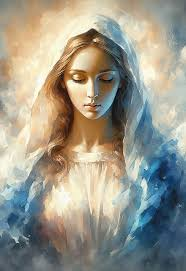
Image result for maryHow can we best understand these words of the Lord Jesus in reaction to a woman who made a positive remarks about Mary, the mother of the Savior? For some people, this is a disparaging statement Jesus made against anyone who might have in mind the intention to look with admiration to the blessed mother of our savior. If you are still not sure of what I am talking about, then please read this conversation as recorded by St. Luke:
"And it happened as He [Jesus] spoke these things, a certain woman of the company lifted up her voice and said to Him, Blessed is the womb that bore You, and the breasts which You have sucked. But He said, No; rather, blessed are they who hear the Word of God and keep it." Luke 11:27-28 (Modern King James Version)
If you read this version of the King James, you are left with the impression that Jesus is matter of fact correcting the woman who spoke favorably of the Blessed mother of the Savior, Mary. However, when we read another version of the same King James, the tone of the savior is different and we may venture to say the whole emphasis of the text becomes different if not positive:
And it happened, as He spoke these things, that a certain woman from the crowd raised her voice and said to Him, “Blessed is the womb that bore You, and the breasts which nursed You!” 28 But He said, More than that, blessed are those who hear the word of God and keep it!” Luke 11:27-28- (New King James Version)

Is Jesus saying 'no my mother is not blessed but rather are blessed those who hear and keep my words' like the Modern Version of the King James Version seems to infer or is Jesus saying 'it is more than that, it is not limited to my mother, blessed are those who hear and keep my word' like the New King James version seem to insist? It all depends on which version you pick up. What is true of these two King James version can be found equally in other translations.

So how do we resolve this seemingly opposite messaging with one being adversarial in tone while the other being non-adversarial in tone?

May I suggest we find the solution of it from the original Greek texts. Instead of choosing the source material from another biblical translation, I will use the Greek text sources used by the King James Version itself as rendered by the eStrong Greek and Hebrew Dictionary. The word used in one version as "No rather" and by the other version as "More than that" is the Greek word: Menounge.
Definition: 
menounge
men-oon'-geh
From G3303 and G3767 and G1065; so then at least: - nay but, yea doubtless (rather, verily).
Now we know why the King James Version uses different formulation of the same verse, it is because menounge could mean 'no but' or 'yes without doubt' or 'rather' or even 'verily (indeed)'. Given this wide diversity of words, translators have different preferences. They can choose one word with a tendency for adversity while another translator might choose a word with a positive connotation.

Nevertheless, I will argue here that Luke used the word, 'menounge' in a rather positive form and not in any negative way as this will become obvious shortly. Before I show you why this is the case from within the very Gospel of Luke itself, allow me to show you the other three other instances where this very word, 'menounge', is used in the New Testament beside Luke 11:28.

The Word 'Menounge' is used also in Romans 9:20, Romans 10:18: and Philippians 3:8.

1) Menounge: Positive Case from Romans 9

This chapter is known for its treatise on divine election. St. Paul approach to the Romans in discussing divine election is to point in anticipation of what his readers might be thinking by saying this:
(19)You will say to me then, “Why does He [God] still find fault? For who has resisted His will?” (20) But indeed [menounge], O man, who are you to reply against God? Will the thing formed say to him who formed it, “Why have you made me like this?”
Paul uses menounge to mean to the Romans that it is more than what they were wondering with regards to 'who can resist God's will if God decides to do what He wants?', he says, matter of fact, who are the Romans thinking they are to even question God in the first place. Here menounge doesn't means that what has been said before is not true but rather that it didn't go far enough. Not only can God do what he wants as the Romans may be wondering but we, as humans, can't even dare to challenge him. St. Paul uses menounge to expand his argument and not to deny the initial statement which says 'For who has resisted His will?'. Clearly Paul is responding to this by emphasizing in the positive that indeed none can resist the divine election of Israel and more than this no one can reply or challenge God's choice.

Hence in Romans 9, the word menounge doesn't cancel the former proposition in verse 19 but rather makes it even more harder by expanding the consequence in verse 20.

2) Menounge: Positive Case from Romans 10

St. Paul makes a long argument in chapter 10 with regard to the efficacy of the gospel and its capacity to reach people's heart. And through his explanation he makes use of the word, menounge, as seen in the verses below:
(16) But they have not all obeyed the gospel. For Isaiah says, Lord, who has believed our report?” (17) So then faith comes by hearing, and hearing by the word of God.(18) But I say, have they not heard? Yes indeed [menounge]: “Their sound has gone out to all the earthAnd their words to the ends of the world.” 19 But I say, did Israel not know? First Moses says: “I will provoke you to jealousy by those who are not a nation, I will move you to anger by a foolish nation.”
The argument is rather clear in this passage, St. Paul quotes the Jewish prophet Isaiah complaining about his uncertainty on the limited number of people in Israel who might have believed in his 'gospel' message (aka report), and Paul said, menounge - it is more than Israel, the message has gone beyond Israel and has reached all the earth and the ends of the world. Clearly, menounge, is not being used in a negative sense here as if it was negating the previous verse, but rather it is used to affirm the first one while expanding its meaning beyond Israel (verse 16, 19) to the rest of the world (verse 18). St. Paul is saying not only did the report reach Israel but it also went beyond Israel to the ends of the earth so to speak. It is not a negation of the first proposition but an expansion of it to include other lands beyond Israel.

3) Menounge: Positive Case of Philippians 3

In this epistle starting from verse 4 to verse 7, St. Paul tells of his credentials as a righteous man from the perspective of his Jewish heritage according to the Mosaic Law. In the middle of it, he uses the word, menounge:
(4) though I also might have confidence in the flesh. If anyone else thinks he may have confidence in the flesh, I more so: (5) circumcised the eighth day, of the stock of Israel, of the tribe of Benjamin, a Hebrew of the Hebrews; concerning the law, a Pharisee; (6) concerning zeal, persecuting the church; concerning the righteousness which is in the law, blameless. (7) But what things were gain to me, these I have counted loss for Christ. (8) Yet indeed [menounge] I also count ALL things loss for the excellence of the knowledge of Christ Jesus my Lord, for whom I have suffered the loss of all things, and count them as rubbish, that I may gain Christ
Here again, St. Paul doesn't negate what he said in verse 7 when he said, 'these I have counted loss for Christ', rather when he uses menounge in verse 8, he affirmed such loss and goes even further, he expands the category of what he considered lost (see the list from verse 4-7). He also considered now 'ALL things loss' and not only 'these things' from his Jewish heritage.

NB: In summarizing the use of 'menounge' by St. Paul, we see that St. Paul doesn't use it to denigrate or cancel former statements, but rather he uses it to show that there is much more than what was said. He uses menounge to include the former statement into a larger narrative. In Rom 9, he meant not only you can't resist God's Will in election but you can't even question him. In Rom 10, he informed that not only Israel believed the report but also the rest of the world. And in Phil 3, he points out that not only those things he mentioned about his Jewish heritage he considered as loss for Christ but also ALL the rest too.

This leads us to the question we started with as we ponder this question, 'what are the chances that St. Luke who was a companion of St. Paul through out his ministry would use menounge to negate previous statement instead of affirming and expanding it just as St. Paul did?' I believe there is no chance he will use it differently than Paul did. And let me show you why.

4) FINALLY, Menounge: Positive Case in Luke 11

If we have learned anything from this word, menounge, in the reflection above, it is that it doesn't negate what is said before but rather takes former proposition in account and expands it. The Lord Jesus is not denying that his mother is blessed, he is expanding the category of the blessed as not to limit it to only his mother:
(27) And it happened, as He [Jesus] spoke these things, that a certain woman from the crowd raised her voice and said to Him, “Blessed is the womb that bore You, and the breasts which nursed You!” (28But He said, “More than that [menounge], blessed are those who hear the word of God and keep it!” Luke 11:27-28- (New King James Version)
Clearly, St. Luke is reporting Jesus words to show that what made Mary, the mother of our Lord, blessed is exactly what makes those who were in that audience blessed, namely the hearing of the word of God and the keeping of those words.

The Context of Luke Gospel About Mary

If we remember how St. Luke started his gospel, he started by informing us that he investigated the content of this gospel from the eye-witnesses of those events:
"... they were passed down to us by those who had been eyewitnesses ... I, too, have carefully investigated everything from the beginning and have decided to write an orderly account for you, most excellent Theophilus" - Luke 1:3 
Since he referred to eyewitness from the beginning, let us remember that among those who were there at the beginning of the Lord Jesus birth, his circumcision, his presentation at the temple, his visit at the temple at age 12 and the angelic visitation during the Annunciation event that kick-started the virginal pregnancy is ... well ... Mary, the mother of the Lord. She was an eye-witness of all these events Luke informed us.

One specific thing that we are told by St. Luke about these events is that Mary heard and kept the words from the Lord:

Example 1: Mary received the word of God and accepted it from the Archangel Gabriel:
"Then Mary said, 'Truly I am the Lord's servant. Let everything you have said happen to me.' Then the angel left her.'' - Gospel Luke 1:38  

Example 2: Mary is a blessed woman for she received the word of God according to the Holy Spirit:
''When Elizabeth heard Mary's greeting, the baby jumped in her womb. Elizabeth was filled with the Holy Spirit and she loudly exclaimed, "How blessed are you among women, and how blessed is the infant in your womb! Why should this happen to me, to have the mother of my Lord visit me? As soon as the sound of your greeting reached my ears, the baby in my womb jumped for joy. How blessed is this woman for believing that what was spoken to her by the Lord would be fulfilled!" -  Gospel of Luke 1:41-45
Example 3: Mary kept the words from the Lord as received by the Shepherd in her heart:
''When they saw this, they [the shepherds] repeated what they had been told about this child. All who heard it were amazed at what the shepherds told them. However, Mary continued to treasure all these things in her heart and to ponder them.'' - Gospel of Luke 2:17-19
Example 4: Mary kept the words of Jesus in her heart even when she didn't understand it:

''And He [Jesus] said to them, Why did you look for Me? Do you not know that I must be about My Father's business? And they did not understand the word which He spoke to them. And He went with them and came to Nazareth, and He was subject to them. But His mother kept all these sayings in her heart.'' - Gospel Luke 2:49-51
Image result for mary

IN CONCLUSION, St. Luke was inviting us to understand that what made a blessed woman of Mary, the mother of the Lord Jesus, the Woman on which breast the Baby-Christ suckled in his infancy was the fact that she heard the word of the God and kept it. The exhortation and lesson to be learned here is that Lord expects as much from every single one of us: Hear and Keep His Words like the Blessed Virgin did.

The Lord Jesus was not correcting the woman who spoke these words, 'Blessed is the womb that bore You, and the breasts which nursed You!', He was rather [menounge] expanding the category of those who are regarded blessed by telling her that 'you too can become blessed if you hear the Word of God and Keep It just like the Blessed Virgin Mary did countless time'.

Post Script
Allow me to end by quoting an ex-Protestant now turned Catholic apologist James Akin:
... the Greek word here translated 'rather' (menoun) does not have anything like the adversive force in Greek that 'rather' does in English. It is simply an emphatic particle normally rendered 'and'. Thus, if Bibles had italics for emphasis, the passage would be better translated: 'He said, and blessed are those who hear the word of God and keep it!' He i snot denying what she said, he is emphatically adding something to what she said. (Internet Question Box, 4/26/99).